Tag Archives: safety

7 tire tips for a safe, smooth ride

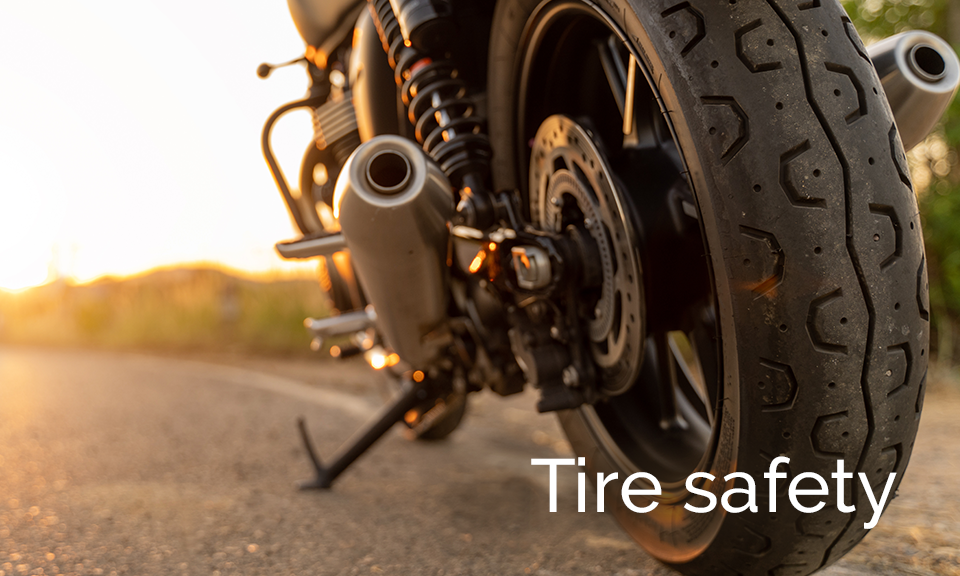
“Where the rubber meets the road” is more than just an expression. It’s the moment of truth. The time for talking is done and someone (or something) is either going to perform or fall short. For a safe, enjoyable, smooth motorcycle ride, how well your tires perform ranks right up there with your driving skills.  

Just like your helmet, tires are essential safety equipment. Make sure yours are ready to grip the asphalt when it counts with these tips: 

1. Start off slow: Ride slowly for a few miles to let the tires warm up before accelerating and cornering normally. This is especially important in the spring and fall when morning temps can be much cooler than the afternoon. 

2. Watch road conditions: An older road or one covered with leaves, grass clipplings, water, or dirt offers less traction—no matter what shape your tires are in. Use caution when driving on unmaintained roadways. 

3. Get a feel for inflation: Overinflated tires have less road traction and amplify the effects of poor road conditions or sudden moves. Underinflated tires will make your motorcycle feel unstable.  

4. Check pressure again: Tire pressure should be checked before every ride, if possible, or at least weekly. Be sure to follow the manufacturer’s specs. This is especially important in hot and cold weather as temperatures can actually change your reading. 

5. Pressures may vary: Tire pressure isn’t one-size fits all. The recommended tire pressure may be different if you’re carrying a passenger or cargo. Remember to factor in the weight of any added accessories like a cargo bag and any saddlebag items. 

6. Examine the tires: Regularly check your tires’ wear, looking at wear bars and tread depth. Worn out tires can quickly lose traction. Plus, look for cuts, cracks, and embedded stones or nails which are cause for replacement. 

7. New tires beware: New tires can be slick! Take extra care until your tires are broken in well enough to maximize your traction. 

For informational purposes only and may not be applicable to all situations. 

Our top 5 tips for boat and yacht maintenance

Any day spent on the water is a good day. And who wouldn’t want more fun, sun and getting nothin’ done? Whether you’re a do-it-yourselfer or you rely on the pros, you can help your boat run well, stay safe and last a long time. The key is investing some time in regular boat maintenance.  

Doesn’t matter if you’re out for family, fun or fishing, take good care of your boat and it’ll return the favor. Here’s a quick maintenance checklist for keeping your boat ship-shape. 

  1. Keep things clean: Boating can be a messy business, but a clean, well-kept vessel should last longer than its slimy, shabby counterpart. Regularly remove scale and algae scum from the hull and watch out for buildup. Maintain upholstery with proper marine cleaners and protectants to avoid replacing it down the road. 
  1. Stay charged up: Marine batteries can last years if properly cared for. Make sure the battery is secured and firmly mounted to the boat before every trip. Recharge it fully after each use to decrease the chance of sulfate deposit buildup. And make sure its water is always at the right level. 
  1. Eye the engine: Most boats are run hard on the weekends and left idle the rest of the week. This irregular use is hard on any watercraft. That’s why it’s so important to check all engine components and fluids every time you hit the water. If you find a leak, get it fixed right away to prevent more damage and keep toxins out of the water. 
  1. Check the prop: Your propeller needs to be inspected regularly. Any dents, nicks, or dings can slow things down, drive up fuel costs, and create internal damage. A few times each season, remove the entire propeller and get rid of any built-up gunk or debris around your prop shaft, and relubricate. 
  1. Don’t stop now: The end of boating season doesn’t mean the end of boat maintenance. Boats aren’t built to be cold. Have yours professionally winterized to prevent freezing damage to the engine and hull, and make sure it’s properly covered for winter storage. 

For information only. Not applicable to all situations. 

The ultimate lake house safety guide

Nothing screams summer like packing up the car and heading down to the lake house. Living by the water provides a constant source of entertainment. But while swimming, boating, and hanging out by the fire can be a ton of fun, they also pose numerous safety risks. If you own or visit a waterfront property, check out our ultimate lake house safety guide to help keep your family safe on and off the water.

Water Safety

  • Keep an eye on kids. Supervision is key to protecting kids at the lake. Watch young kids around the water, no matter how far from danger they may appear.
  • Learn to swim. If you plan on taking a dip, be sure everyone with you knows how to swim. Enroll children in swim classes before heading down to the lake.
  • Swim cautiously. Choose your swimming location carefully. An ideal location is clean, relatively still, and out of the way of watercraft or wake, such as a designated swimming area.
  • Watch where you jump. Avoid jumping or diving into water from elevated surfaces such as cliffs or bridges. Murky water can conceal dangers such as jagged rocks or submerged tree branches.

Boating Safety

  • Know your state’s rules. Over half of U.S. states require some sort of education or license in order to operate a boat. Figure out where you’ll be boating and that state’s requirements before you hit the water.
  • Wear a life jacket. Everyone on board should be wearing an appropriate life jacket approved by the U.S. Coast Guard, even strong swimmers. Make sure the life jacket is the correct size and properly fastened.
  • Be aware of carbon monoxide. Boat engines release carbon monoxide while running. Avoid closed-off and poorly-ventilated areas of the boat and never hang out on top of a swim platform while the engine is running.
  • Stay sober. Not only is operating a boat while intoxicated dangerous, it’s illegal. Don’t boat under the influence. 

Bonfire Safety

  • Check the weather. Avoid having a fire in windy conditions. Strong winds can blow sparks and hot embers towards you and nearby surfaces. 
  • Choose a safe location. Build your bonfire a safe distance away from combustible material, including any structures, brush, or low-hanging trees. Be sure to clear the surrounding area of any flammable debris such as leaves or tree branches. Also be sure to follow all applicable laws and ordinances.
  • Avoid accelerants. Accelerants such as gasoline or lighter fluid should never be put on a fire. The safest way to start a fire is with small kindling and paper.
  • Be prepared to put it out. Always have a way to properly extinguish the fire or a fire nearby. This could be a garden hose, a bucket of water, or a fire extinguisher, depending on how the fire was built.

For informational purposes only and may not be applicable to all situations.

Hurricane safety kit

The heart of hurricane season is approaching. Are you ready? Preparation is key to staying safe and protecting your property. Here are some ideas to help your planning when you think about a potential evacuation and supplies to have on hand.

Be sure to share these tips on social networks to help your friends and family prepare.

For information only. Not applicable to all situations.

Don’t leave your home alone without these dos and don’ts

“We live on the most boring street in the whole United States of America, where nothing even remotely dangerous will ever happen.” – Buzz McCallister, Home Alone

This summer, half of America will set their emails to “out-of-office,” water their plants and venture out on vacation. While you’re busy with your packing list, we have another list that can help. So you can get ready to go—and get your home ready to stay secure while you’re gone. 

Even if you think you live on the most boring street in the whole United States, following these tips will help you feel better about leaving your home alone. 

Continue reading

7 golf cart safety tips

They’re not just for golf anymore! Golf carts can be found everywhere from retirement communities to college campuses. Some states have even passed laws allowing them to putter down public streets. But despite their lower speed, golf carts are legitimate vehicles that demand safe driving. Check out these 7 safety tips before you hit the road or the course.

  1. Check Licensing Requirements: Do you need a driver’s license to drive a golf cart? It depends on where you live. Find out what’s required in your state before getting behind the wheel.
  2. Stay Inside: Those open sides may be tempting but it’s important to keep all arms and legs inside the vehicle at all times, except when signaling. 
  3. Signal Turns Manually: Golf cart turn signals are small and hard to see. Always use hand signals to indicate you intent to turn.
  4. Don’t Overcrowd: Only carry the number of permissible passengers, which will typically be the number that you have seats and seatbelts for. No one should be sitting on the floor or someone’s lap.
  5. Yield to Pedestrians: Just like when you’re in a car, pedestrians have the right of way. Be sure to follow all the rules of the road and stop and let them cross before carrying on with your drive.
  6. Stay Sober: Alcohol can seriously impede your ability to safely operate any vehicle, including golf carts. Depending on your state, you could even receive a DUI for driving a golf cart under the influence.
  7. Consider Insurance: Golf cart insurance isn’t just a good idea for accidents, in some states it’s mandatory. Talk to your insurance agent about golf cart insurance.

For informational purposes only and may not be applicable to all situations.
Coverage is subject to policy terms, conditions, limitations, exclusions, underwriting review and approval, and may vary or not be available for all risks or in all states. Rates and discounts vary, are determined by many factors, and are subject to change. Policies are written by one of the licensed insurers of American Modern Insurance Group, Inc., including but not limited to American Modern Property and Casualty Insurance Company (CA Lic. No. 6129-1.)

Manufactured Home

Tie-downs are crucial for manufactured homes

Tie-downs are crucial when it comes to the safety of any manufactured home. Because manufactured homes are very lightweight, strong winds are more likely to get under and lift the home. If your mobile home is not tied down, it could get rolled or flipped in a tornado or severe windstorm.  Continue reading

Heat up Valentine’s Day without burning down your home

Candles and romance go hand in hand on Valentine’s Day, but what starts as a warm glow could escalate into a dangerous fire. Although candles account for a small percentage of total home fires, they can still spark serious damage. Keep these tips in mind this Valentine’s Day to make sure it’s love, and not smoke, that’s in the air.

Continue reading

Social media privacy: Taking control of your data

Social media makes it easy for you to leave a trail of personal information that you may not want to share with advertisers, analytics companies, or people other than your connections. Take charge of your online privacy with these 6 tips from Hartford Steam experts.

Continue reading

10 tips for space heater safety

Space heaters are pretty popular for a reason. When the furnace is on the fritz or when heating the whole house simply costs too much, they can take the chill off and maybe save you money. But they can also be a significant fire hazard if they’re not used the right way. Don’t let things get too toasty this winter. Handle your heater with care. Continue reading

4 ways to stay ahead of smartphone hackers

Did you know that Americans check their phone on average 80 times a day? Surprising, right? Unfortunately, the amount of times that our phones can be compromised is surprisingly high as well.  And because mobile phones are so valuable to hackers, more and more new exploits are being discovered.

Continue reading

Deep fry your turkey with a side of safety

For the perfect holiday dinner, casseroles and cranberries, stuffing and sweet potatoes are all crowd favorites. But turkey is still the start of the culinary show. Of course, not all birds are prepared the same way. Some are slowly oven-roasted and basted for hours, others stuffed with vegetables and bread. And then there are the deep-fried. Many folks swear it’s the juiciest, tastiest way to cook a turkey, and it certainly saves time. But it also creates a lot of safety concerns, from cooking fires to serious burns. 
Continue reading

Halloween hacks that protect against rental property nightmares

So, you’ve done the hard part and purchased a rental property. You’ve bought deadbolts, security devices, smoke detectors and fire extinguishers to keep your tenants safe. You’ve also created the perfect lease to outline the terms and conditions of what you expect from your tenants. If you haven’t talked to your American Modern® insurance agent about the right insurance coverage for your rental property, you could face some sleepless nights worrying about what could possibly go wrong.

Continue reading

6 essential dirt bike maintenance tips

Each time you take your dirt bike out on the trails, it can take quite the beating! Dirt bike maintenance is a must for riders of all levels. How much TLC you should give your bike depends on how you ride. If you work the bike hard, you’ll work just as hard with cleaning and inspections. For leisurely riders, not so much. Either way, a few minutes in the garage can mean hours on the trails.   

If you’re new to owning a dirt bike or simply need a brief refresher, here are some expert tips to add to your maintenance schedule. 

Continue reading